PCOS, Endometriosis & Reproductive Conditions

Most women wait years for answers. Bloom gives you a detailed clinical picture of your own anatomy so you can stop guessing and start knowing.
Bloom condition monitoring illustration
8.5years
The average UK wait for an endometriosis diagnosis.

Bloom gives you daily clinician-reviewed imaging to bring to any specialist; concrete documentation that can compress years of uncertainty into weeks.

What Bloom documents
and what it means for you

With reproductive health, much of what matters is invisible without imaging. Blood tests measure hormones; they can't see your follicles, your lining, or your ovaries. Daily imaging can. Whichever situation you are in, Bloom documents all of it, reviewed by a certified clinician, in a written report you can share.

01
Ovarian Morphology

What your ovaries actually look like

PCOS has a structural signature visible on ultrasound: a high antral follicle count (typically 12 or more), peripheral follicle distribution, and increased ovarian volume. Bloom counts, measures, and describes both ovaries across your full monitoring window. This is exactly what a specialist needs, not symptoms, but observed anatomy, in writing.

02
Follicle Activity

Whether follicles are developing, and what happens to them

Are follicles growing at all? Does one become dominant? Does it reach maturity and rupture, or does it stall, or form a cyst? Daily imaging tracks follicle development through every stage. For women with PCOS, anovulatory cycles, or unexplained cycle irregularity, this is often the first time the picture has been clear.

03
Uterine & Endometrial Findings

The lining, the uterus, and anything structural

Endometriosis affects the uterus and its lining in ways that show up on imaging: adenomyosis, thickened or irregular endometrium, and structural disruption are all visible. Bloom tracks endometrial thickness and texture daily, and documents findings that may warrant further investigation; fibroids, polyps, free fluid, or patterns consistent with adenomyosis.

04
Cycle Patterns

What your cycle is actually doing, across weeks

Daily scans shows you how your cycle unfolds, or doesn't. Late ovulation, absent ovulation, irregular follicle development, luteal phase findings; these patterns are only visible across time. Your clinician will describe what they observe and flag anything worth raising with your doctor.

05
Your Report for Your Doctor

Clinical documentation, written in plain language, structured to share

Every Bloom monitoring window ends with a written clinician report: structured findings for each structure assessed, a summary of the cycle pattern observed, and clear language about what warrants follow-up. This is the document that changes specialist appointments. Instead of describing symptoms, you arrive with observed, reviewed imaging. That is a different conversation entirely, and for many women, it is the first time a specialist takes their concerns seriously from the very first visit.

Also trying to conceive? PCOS, endometriosis, or irregular cycles can complicate conception for many women. Bloom's monitoring addresses both at the same time; understanding your condition and optimising your timing are complementary processes.  Bloom for trying to conceive →

Understanding your options

Symptom diary, blood test, or Bloom?

Each approach gives you different information. Here's what each one actually shows, and where it stops.

Approach
What it gives you
Where it stops
What it gives you
  • Recording how you feel over time
  • Spotting patterns in pain or cycle irregularity
  • Useful context to bring to a GP
Where it stops

Symptoms are subjective and easy to dismiss. No structural information. No way to distinguish between conditions with overlapping symptoms.

What it gives you
  • Measuring hormone levels at a single point in time
  • Screening for broad hormonal imbalances
  • Supporting a PCOS or reserve assessment
Where it stops

Hormones fluctuate. A single test is a snapshot of chemistry, not anatomy. Can't show follicle morphology, endometrial texture, or structural findings.

What it gives you
  • Single detailed structural assessment
  • Direct imaging of ovaries and uterus
  • Performed by a trained clinician
Where it stops

One scan, one moment. Cycle-phase timing matters enormously for interpretation, and clinic appointments rarely coincide with the most informative window. Waiting lists can be months, and the process can be stressful.

What it gives you
  • Daily clinician-reviewed scans
  • Follicle activity, ovarian morphology, endometrial changes tracked across the cycle
  • Written report structured for sharing with a specialist
  • No waiting list; starts when you choose
Where it stops

If a rough estimate is enough, tracking and a blood test will do. Bloom is for those who want or need a deeper understanding, and objective information to make informed decisions on their reproductive health.

These approaches complement each other. Blood tests, imaging, and clinical assessment each add something different. Bloom's value is in the depth and continuity of what it adds, all in a convenient process.
Did you know?

Endometriosis affects 1 in 10 women, but the average diagnosis takes 8.5 years in the UK. During that time, most women have normal-looking blood tests and are told nothing is wrong. Imaging tells a different story. Structural findings, abnormal lining patterns, and cycle irregularities can all be documented before a diagnosis is confirmed, and that documentation changes what happens at specialist appointments.

Get in Touch

Ready to start monitoring, or just want to know if Bloom is right for your situation? Register your interest or send us your questions; we're here to help.

Register Your Interest

Our medical team will discuss your specific situation with you before sending your kit; no commitment, no referral, or GP letter needed.

Get in touch

Questions, or cost is a barrier? Let us know.

Have questions?

Tell us about your situation and we'll help you understand whether Bloom is right for you, and what it could show you.

Cost is a barrier?

We're working to make Bloom accessible to everyone who needs it. Let us know your situation.

Frequently Asked Questions

Questions about using Bloom when you have a reproductive health condition. Ask us anything else.

No. Bloom is not a diagnostic service, and your clinician will not diagnose a condition. What they will do is describe what they observe: follicle count and distribution, ovarian morphology, endometrial appearance, and any structural findings worth flagging. That documentation is then yours to share with a GP or specialist, who can make a clinical assessment. Many women find that arriving at that appointment with reviewed imaging changes the conversation significantly.
Yes, and this is a common situation Bloom is useful for. Hormone blood tests measure chemistry; they cannot see structure. Normal hormones do not rule out PCOS-pattern ovarian morphology, abnormal endometrial findings, or cycle irregularities that only show up in imaging. Many women with clear structural findings on ultrasound have entirely normal hormone panels. If your symptoms don't match your test results, imaging adds a dimension that blood tests simply cannot.
Your clinician will contact you prior to starting Bloom to discuss timing with you. For condition monitoring, the most informative window typically starts around day 8–10, when follicle activity becomes trackable. If your cycles are very irregular, or you don't have a clear cycle, starting earlier (day 5–7) can be useful to catch the full picture. For suspected endometriosis, later in the cycle (closer to or after ovulation) can also be informative for endometrial assessment.
Yes, Bloom can give many insights for women with irregular cycles. Prior to starting, your clinician will contact you and listen to you, to help you use Bloom to meet your goals. Bloom is flexible, and if your cycle is surprisingly irregular, it will adapt to it.
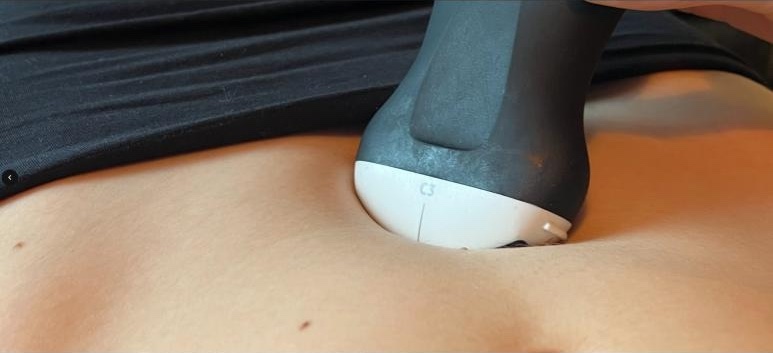
Bloom uses an external ultrasound, so the only discomfort you may feel comes from pressing on your abdomen for a couple of minutes. Every woman feels pain differently, but you can always adjust positioning so it is more comfortable for you. We recommend taking your time, and you will be guided on how to adjust the probe. If comfort is a serious concern for you, please get in touch before ordering and we can talk it through.
If something is observed that warrants clinical attention (a cyst, a structural finding, signs consistent with a condition not previously identified) your clinician will describe it clearly in the report and advise on what to discuss with your GP or specialist. For women using Bloom specifically because they suspect something is wrong, this is often the outcome they were hoping for: concrete documentation of what they've been experiencing, in clinical language, with a clear next step.
This is different for everyone, and your clinician will discuss this with you. But for most women wanting information on a potential condition, a few days of imaging across a single cycle will be enough.

More on Bloom

Everything you might want to know before ordering your kit.