IVF, IUI & Fertility Treatment

Treatment is stressful enough. Bloom gives you daily visibility into how your body is actually responding sov every decision gives you the best chance of getting pregnant.
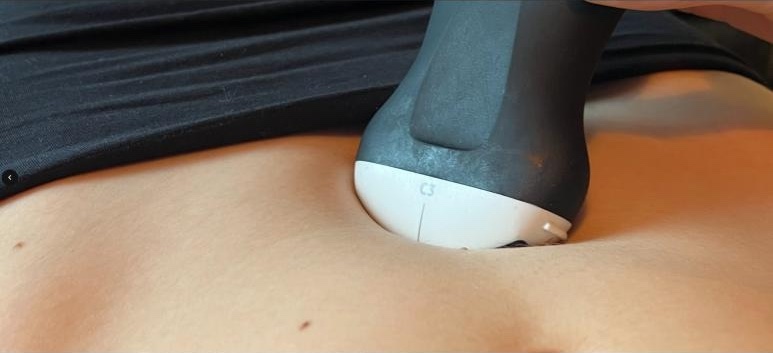
Bloom treatment support illustration
24–48hours
The gap where information matters, and is hardest to get.

Clinic appointments during treatment are timed, but they can't be daily. Between scans, follicles grow, lining changes, and responses shift. Bloom fills that gap with daily home imaging, reviewed by a certified clinician, every day of your monitoring window to give you the best chance at conception.

What Bloom monitors during treatment
and why it matters

Fertility treatment requires precise timing and continuous monitoring in a calm environment, and a lot can change overnight. Bloom doesn't replace your clinical team. It gives you the daily picture that clinic visits alone cannot, and it puts that information in your hands.

01
Follicle Growth — IVF Stimulation

Daily follicle tracking throughout your stimulation cycle

During ovarian stimulation, multiple follicles develop simultaneously and need to reach the right size before trigger. Bloom tracks every follicle daily (count, size, and growth rate) so you can see exactly how your body is responding. If lead follicles are growing faster or slower than expected, you have that information the same day, from home, not at your next clinic visit.

02
Lining Preparation — FET & Transfer

Endometrial thickness and pattern, tracked to transfer day

For frozen embryo transfer and natural cycle IVF, the lining must reach at least 7mm with a specific trilaminar (triple-line) pattern to be receptive. Bloom tracks endometrial thickness and texture every day in the lead-up to transfer, so you can see the lining developing, or identify early if it's lagging.

03
Ovulation Timing — IUI

Confirming ovulation happened, and exactly when

IUI timing is everything. The LH surge triggers ovulation, but the surge and the event are not the same thing. Bloom confirms ovulation visually. This is especially useful when LH strips give ambiguous readings, or when you want certainty that the insemination was well-timed rather than relying on hormone signals alone.

04
Treatment Response

How your ovaries and uterus are responding, day by day

Ovarian response to stimulation varies; some women respond quickly, some slowly, some develop more follicles than expected. Signs of ovarian hyperstimulation (OHSS) are visible on imaging before symptoms become severe: enlarged ovaries, increased follicle count, free fluid. Bloom gives you and your clinical team early visibility, so decisions can be made with more information and less urgency.

05
Between Appointments

Continuity of monitoring that clinic schedules cannot provide

Clinic monitoring during treatment typically happens every two to three days. Between those appointments, your follicles grow, your lining changes, and your body responds, and none of that is visible to you or your team. Bloom fills that window with daily clinician-reviewed imaging. Every scan goes in front of a qualified clinician, who sends you a written report the same day. Your clinical team can use your Bloom reports alongside their own assessments: the more information in the room, the better the decisions that come from it.

Trying to conceive without treatment, or have a condition? Many women begin monitoring without a formal treatment pathway, or are managing a condition like PCOS or endometriosis alongside fertility goals. Bloom's daily imaging addresses all of these at once.  Bloom for trying to conceive →  ·  PCOS & conditions →

Understanding the gap

Clinic monitoring alone, or Bloom alongside it?

Your clinic's monitoring is essential. Bloom doesn't replace it: here's what each provides, and where each one stops.

Monitoring approach
What it gives you
Where it stops
What it gives you
  • Expert, detailed assessment at scheduled appointments
  • Directly informs treatment decisions by your clinical team
  • Blood tests and scans in the same visit
  • Medically authoritative assessments
Where it stops

Clinic appointments are typically every 2–3 days during stimulation. Between visits, you're managing without real-time information. Changes overnight may not be seen until it's too late to adjust.

What it gives you
  • Detecting the LH surge as it happens
  • Inexpensive and easy daily use
  • Useful early signal for IUI timing
Where it stops

The LH surge and ovulation are related but not the same. Strips tell you the signal fired: not that ovulation followed, or precisely when. For IUI, that distinction matters.

What it gives you
  • Daily follicle tracking between clinic appointments
  • Endometrial lining monitored to transfer or ovulation
  • Ovulation confirmation for IUI timing
  • Early visibility of ovarian hyperstimulation signs
  • Written reports you can share with your clinical team
Where it stops

Bloom does not make treatment decisions and is not a substitute for your clinic's clinical judgment. It gives you and your team more data, more often: between the appointments where decisions are made.

Bloom is designed to sit alongside clinic monitoring, not replace it. Women can share their Bloom reports directly with their clinical team as supplementary documentation.
Did you know?

Endometrial lining thickness is one of the strongest predictors of IVF implantation success. A lining below 7mm at transfer is associated with significantly lower implantation rates, yet most women only have their lining checked once or twice before transfer day. Daily monitoring in the week before transfer can show whether the lining is developing on track, giving time to act if it isn't, rather than discovering it at the transfer appointment.

Get in Touch

Ready to start monitoring alongside your treatment, or want to talk through whether Bloom fits your situation? Register your interest or send us a message.

Register Your Interest

Bloom will launch following formal CQC approval. You will then be contacted first to discuss your needs and get priority access to our services: no commitment at this stage.

Get in touch

Questions, or cost is a barrier? Let us know.

Have questions?

Tell us where you are in your treatment journey and we'll help you understand how Bloom fits, and what it can show you.

Cost is a barrier?

We know fertility treatment is already expensive. We want to make daily monitoring accessible to everyone who needs it: let us know your situation.

Frequently Asked Questions

Questions about using Bloom during fertility treatment. Ask us anything else.

Yes: Bloom produces written reports in clinical language that your team can read alongside their own assessments. If you want to share your Bloom data with your clinic, your clinician will format it accordingly. Your clinical team remains responsible for all treatment decisions: Bloom gives them more information to work with.
For IVF stimulation, the most useful window to start Bloom is around day 5–7 of stimulation, when follicles are large enough to be clearly trackable (typically above 10mm). Starting at day 3–4 is also possible and gives you a baseline. For FET lining preparation, starting 5–7 days before your expected transfer date is usually informative, though your Bloom clinician will advise you on timing specific to your protocol. For IUI monitoring, starting around the time your clinic would begin monitoring (usually cycle day 8–10) is appropriate.
Your Bloom clinician will describe what they observe: follicle count, sizes, ovarian volume, and any signs that might warrant clinical attention, such as rapidly enlarging ovaries or signs consistent with OHSS. They will not diagnose or make treatment recommendations. If something is observed that raises a concern, they will advise you clearly to contact your clinical team. The value is in having that observation daily rather than waiting for your next clinic appointment.
Natural cycle FET requires tracking ovulation to time the transfer correctly, typically 5–7 days after ovulation for a blastocyst transfer. Bloom is particularly useful here because it confirms the exact day of ovulation, rather than estimating from a hormone surge. Lining development can also be tracked daily in the approach to transfer. Many women find this is where Bloom adds most: the timing precision for natural FET is tight, and imaging confirmation is significantly more reliable than OPK strips alone.
This is something your clinician will be aware of when you start using Bloom. PCOS often means a higher antral follicle count and a greater risk of over-response to stimulation drugs. Daily monitoring during stimulation is especially important for women with PCOS, because follicle counts can rise quickly and OHSS risk needs close attention. Bloom gives you daily visibility between clinic appointments, so you're not relying on every-other-day assessments during a window where things can change overnight. Your PCOS-pattern ovarian morphology is also documented, which can be useful context for your clinical team throughout treatment.
Bloom uses external ultrasound, not transvaginal. This mean that the only discomfort would be from pressing on your abdomen for a couple of minutes. During stimulation, the ovaries are enlarged and can be tender: this is normal, and the probe positioning can be adjusted. You will be guided on adjustments, and no significant pain has been reported by users, but please don't hesitate to contact us if you still feel pain.
Absolutely. If you're preparing for IVF, considering treatment, or trying to conceive naturally while waiting for a clinic appointment, Bloom gives you detailed information about your cycle that doesn't require a formal treatment pathway. Understanding your baseline ovarian reserve, follicle development, and lining response before treatment begins can be genuinely useful context for conversations with your clinical team. Try visiting our page  Bloom for trying to conceive →  

More on Bloom

Everything you might want to know before ordering your kit.